1. Tinea versicolor
Tinea versicolor is a common fungal infection caused by an overgrowth of yeast on the skin, specifically Malassezia species. This condition typically affects the chest, back, neck, and upper arms, leading to small, discolored patches that may be lighter or darker than the surrounding skin. The patches often have a fine scale that becomes more noticeable when the skin is scratched.
The fungal overgrowth disrupts the normal pigmentation process, causing these spots to appear. Tinea versicolor is more noticeable in warm, humid climates or during summer months when sweating increases. It is not contagious but can recur if conditions favor yeast growth.
- Appearance: Oval or round patches, usually white, pink, or tan
- Location: Upper chest, back, neck, and arms
- Symptoms: Usually no itching or discomfort, sometimes mild scaling
Tinea versicolor is generally diagnosed based on appearance and a skin scraping examined under a microscope. Treatment involves topical antifungal medications such as selenium sulfide, ketoconazole shampoos, or creams. In resistant cases, oral antifungal drugs may be prescribed by a dermatologist.
2. Idiopathic guttate hypomelanosis
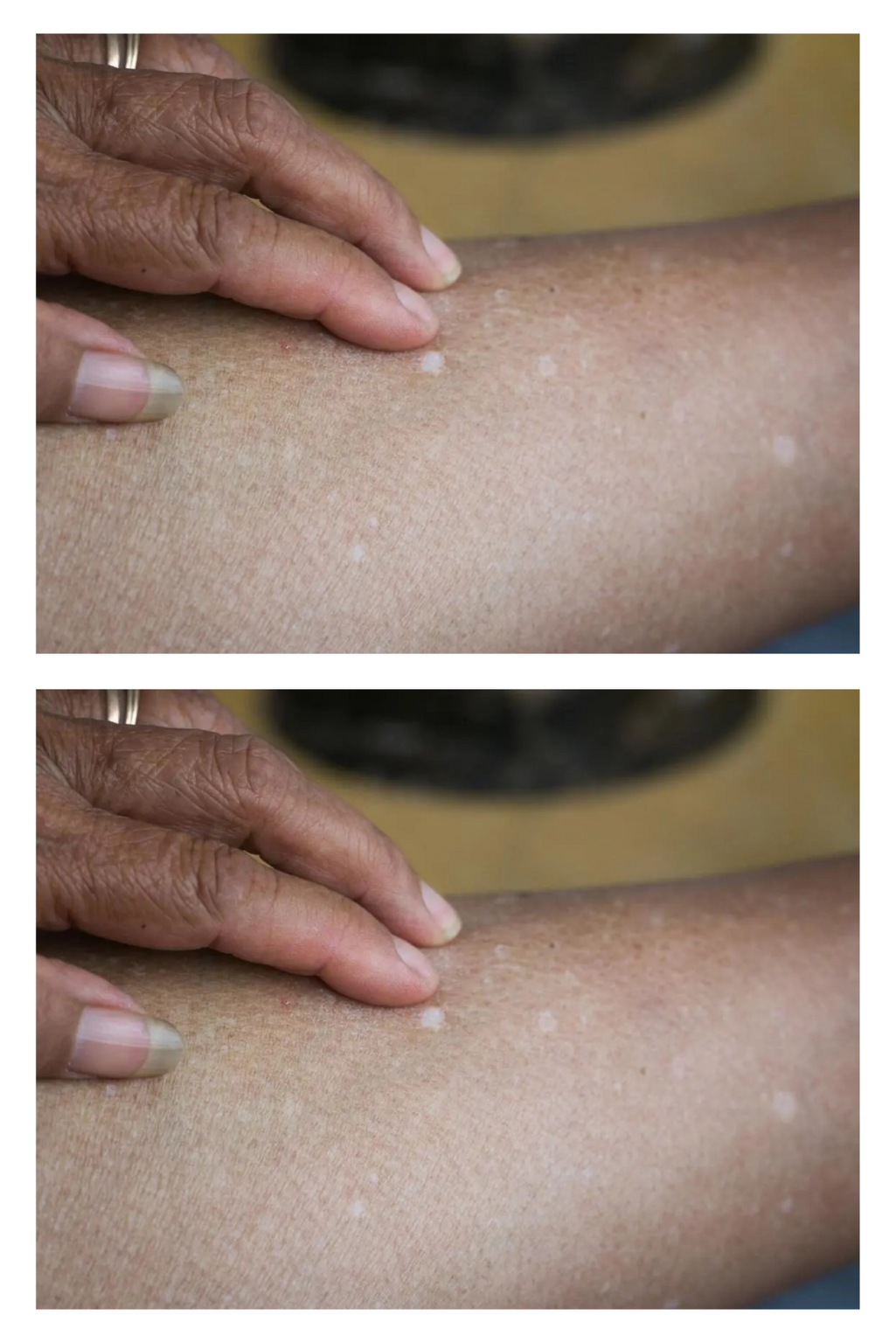
Idiopathic guttate hypomelanosis (IGH) is a benign skin condition characterized by small, white, flat spots that commonly appear on sun-exposed areas, especially the forearms and shins. These spots are caused by a localized loss of pigment-producing cells (melanocytes) due to chronic sun exposure and aging.
IGH spots are typically 2 to 5 millimeters in diameter and have sharply defined edges. Unlike fungal infections, these spots do not scale or cause symptoms and do not spread rapidly. They are more common in middle-aged and older adults and tend to increase in number with age.
- Appearance: Small, round or oval white spots with smooth surfaces
- Location: Forearms, shins, and other sun-exposed areas
- Symptoms: Asymptomatic, no itching or scaling
There is no specific medical treatment needed for IGH as it is harmless. Some may choose cosmetic options such as topical retinoids or laser therapy to improve appearance, but these should be discussed with a dermatologist. Preventing further sun damage by using sunscreen can reduce progression.






