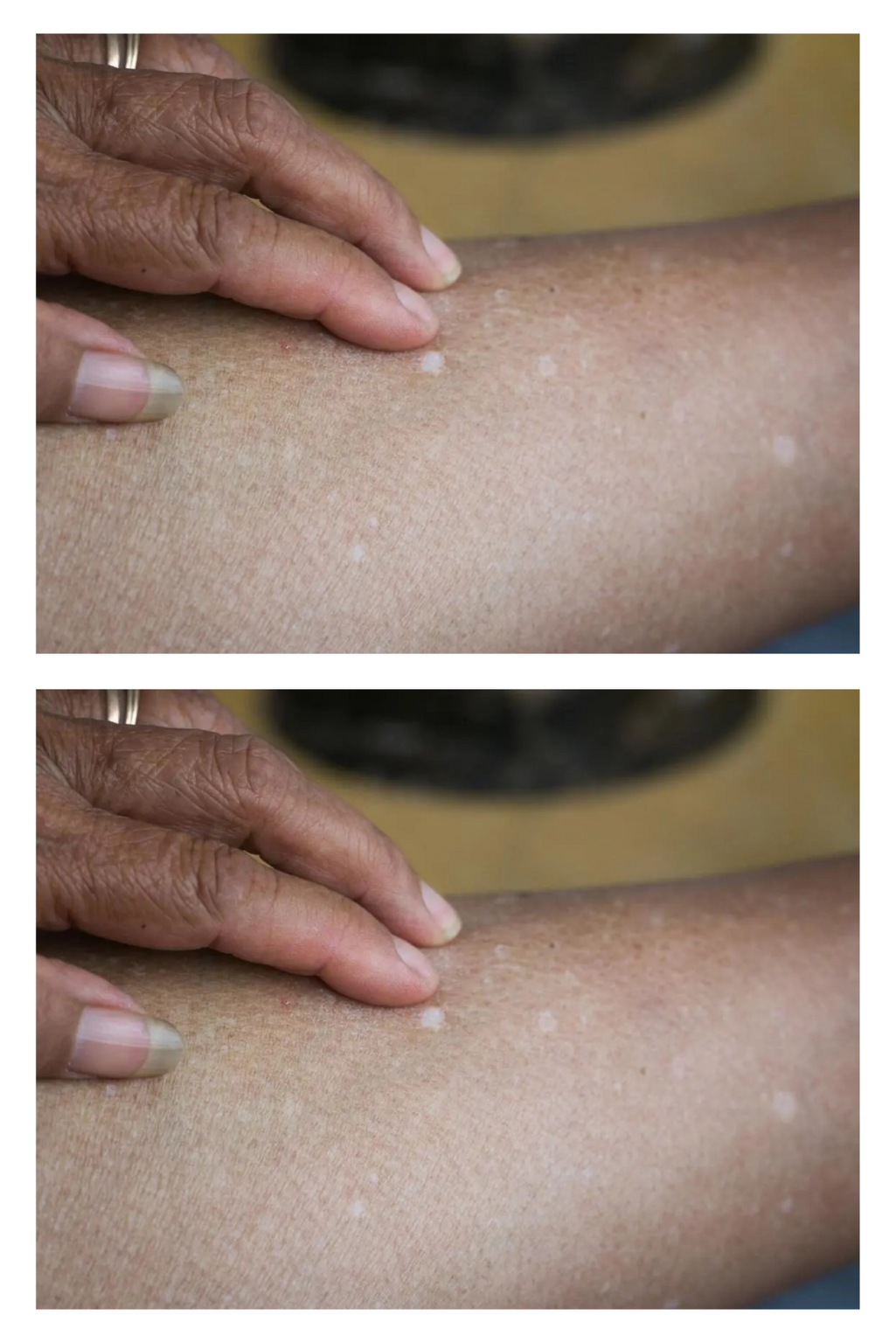
3. Vitiligo
Vitiligo is an autoimmune condition where the immune system attacks melanocytes, the cells responsible for skin pigmentation. This results in well-defined, depigmented white patches that can appear anywhere on the body, commonly on the face, hands, arms, and around body orifices. Unlike tinea versicolor or idiopathic guttate hypomelanosis, vitiligo lesions are completely devoid of pigment and usually painless.
The exact cause of vitiligo is not fully understood, but it is associated with other autoimmune diseases such as thyroid disorders. The patches may gradually enlarge and new spots can appear over time. Early diagnosis is important as treatments can help slow progression and improve appearance.
- Appearance: Large, sharply demarcated white patches, sometimes with a chalky or milky tone
- Location: Commonly affects areas exposed to friction or sun, including face, hands, and feet
- Symptoms: No physical discomfort, though psychological impact can be significant
Diagnosis usually involves a thorough skin examination and sometimes a skin biopsy or blood tests to check for associated autoimmune conditions. Treatment options include topical corticosteroids, calcineurin inhibitors, phototherapy, and in some cases, surgical grafting of pigment cells.
When to See a Doctor
If you notice new or changing white patches on your skin, it is important to consult a dermatologist for an accurate diagnosis and appropriate management. Immediate medical attention is especially warranted if the spots spread rapidly, are associated with other symptoms like itching or pain, or if you have a personal or family history of autoimmune diseases.
Conclusion
White spots on the skin can have various causes ranging from harmless pigment changes to autoimmune conditions requiring medical intervention. Understanding the differences between tinea versicolor, idiopathic guttate hypomelanosis, and vitiligo helps guide appropriate treatment and when to seek professional care. Early diagnosis and treatment can improve outcomes, especially in conditions like vitiligo.
This information is not a substitute for professional medical advice. Always consult a healthcare provider for diagnosis and treatment tailored to your individual needs.






