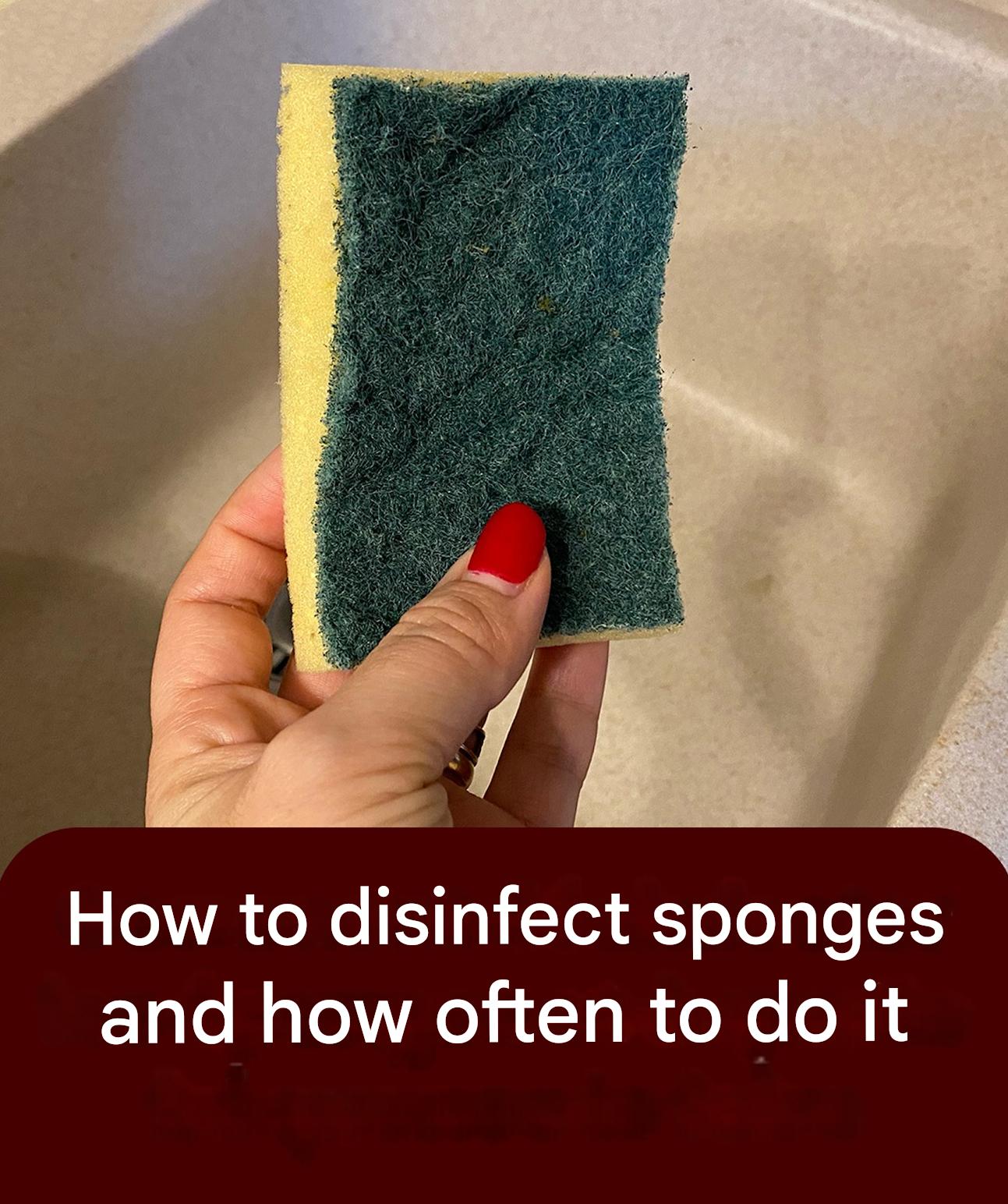
1. Why sponges breed microbes
Kitchen sponges provide an ideal environment for microbial growth due to their porous and absorbent structure. They retain moisture and food particles, which serve as nutrients for bacteria and fungi. Because sponges are handled frequently and often remain damp between uses, microorganisms can settle deep within the fibers, forming biofilms that protect them from surface cleaning.
Simply rinsing a sponge with water is insufficient to eliminate these microbes. Over time, this microbial buildup can increase the risk of cross-contamination in food preparation areas, especially if the sponge is used on multiple surfaces without proper disinfection.
2. Microwave disinfection method
Microwaving a thoroughly wet sponge is one of the most efficient home methods to disinfect it. The trapped water inside the sponge heats rapidly in the microwave, producing steam that penetrates the sponge’s fibers and kills most bacteria and viruses.
To disinfect a sponge this way, fully saturate it with water to avoid fire hazards or damage. Place the wet sponge in the microwave and run it on high power for about one minute. After microwaving, allow the sponge to cool before handling, as it can become very hot. Never microwave a dry sponge or one containing metallic components, as this can cause sparks or fire.






