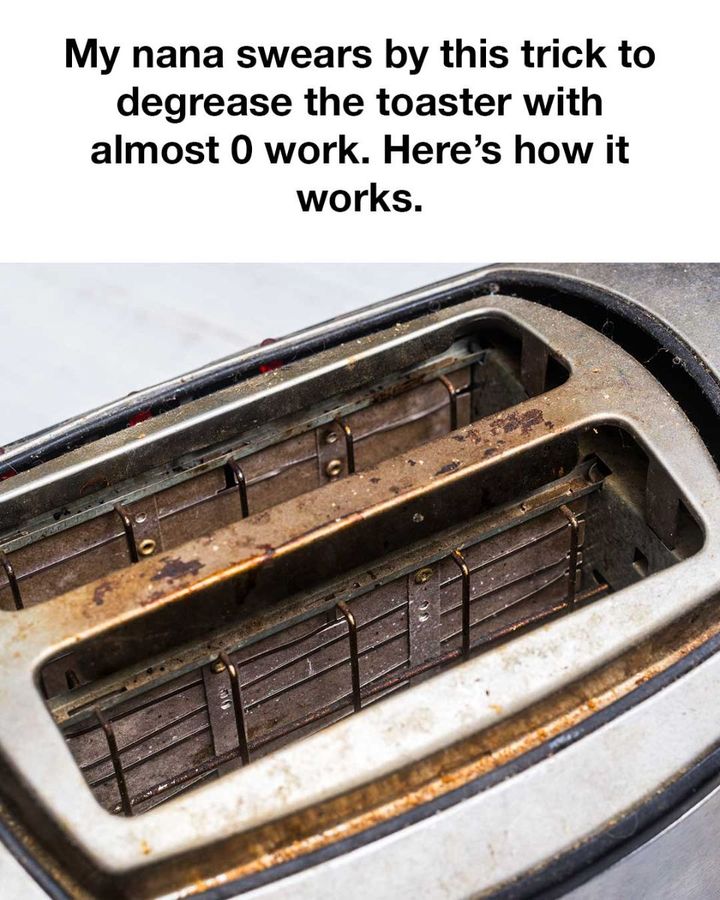
3. Degrease exterior with vinegar
To tackle grease on the toaster’s exterior, prepare a solution of equal parts white vinegar and warm water. Vinegar’s acetic acid naturally breaks down oily residues without leaving harmful chemical traces.
Soak a soft cloth or sponge in the solution, wring out excess liquid, and gently wipe the toaster’s outer surfaces, focusing on greasy patches. Avoid saturating the appliance or allowing liquid to seep into openings or electrical components.
This method is effective for most finishes but should not be used on unsealed wood or certain painted surfaces, as vinegar’s acidity can damage or dull these materials.
4. Scrub stubborn spots with baking soda
If some spots resist vinegar alone, sprinkle a small amount of baking soda onto a damp cloth and lightly scrub the affected areas. Baking soda’s mild abrasiveness helps lift stuck-on grime without scratching metal or plastic surfaces.
Never mix baking soda directly with vinegar on the appliance, as the reaction creates fizzing that could drive moisture into sensitive parts. Instead, use them sequentially, rinsing thoroughly between applications when possible.
This approach should not be used on delicate finishes such as anodized aluminum or brushed metal that may scratch easily.
5. Clean crevices with toothbrush
Grease and crumbs often accumulate in tight spaces around knobs, buttons, and seams. Use an old, soft-bristled toothbrush dipped in the vinegar-water solution to gently scrub these hard-to-reach areas.
Work carefully to avoid pushing debris further inside or damaging delicate controls. Cotton swabs moistened with the same solution can help reach even narrower gaps.
Avoid using stiff brushes or excessive force, which can damage plastic components or loosen buttons.






