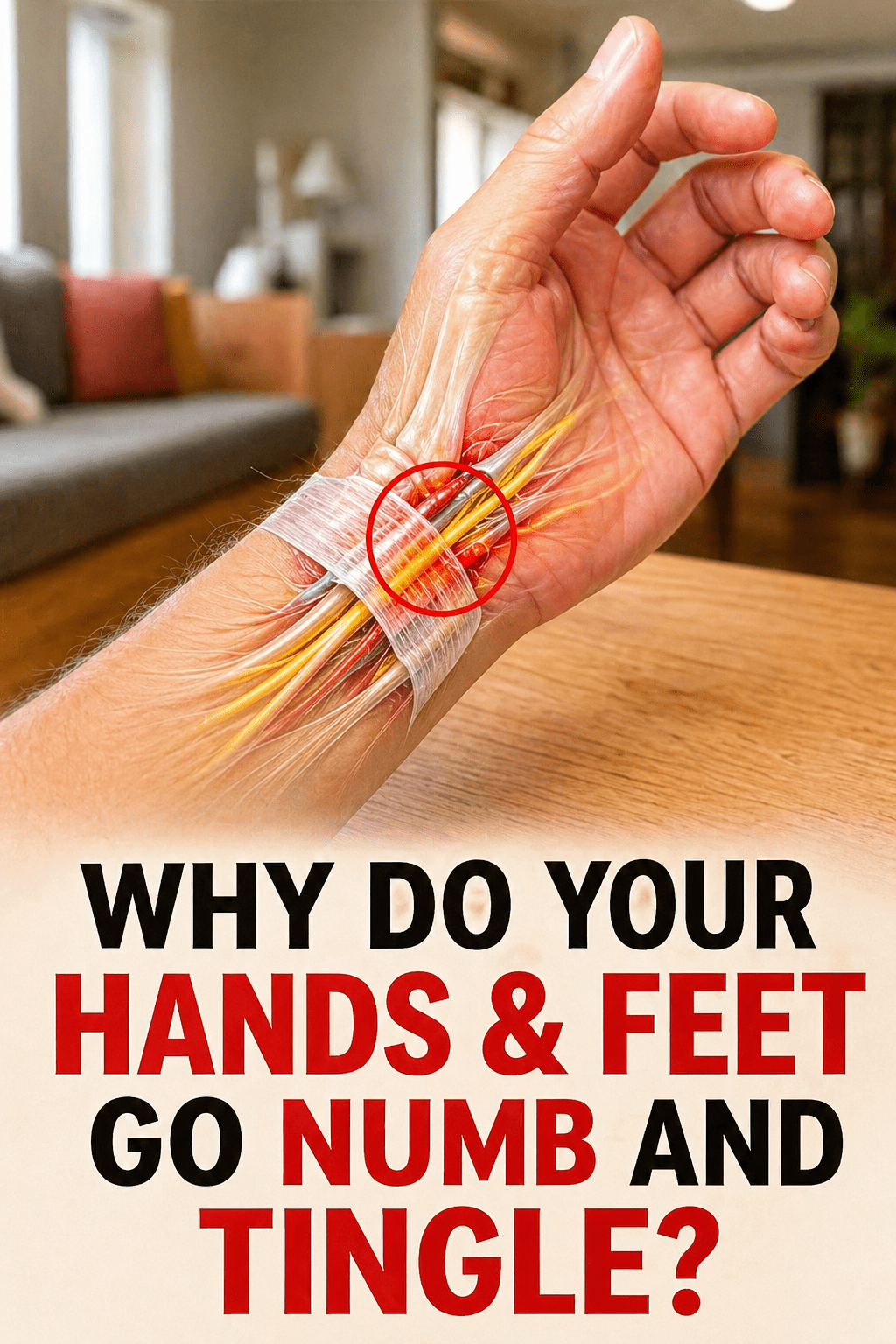
1. Temporary nerve compression
Temporary nerve compression is the most common cause of your hands or feet “falling asleep.” This occurs when pressure is applied to a nerve, often due to the way you position your limbs during sleep or certain repetitive movements. For example, resting your head on your arm or sleeping with your wrist bent can compress the median nerve or other peripheral nerves, causing that familiar tingling or numbness.
In practice, this sensation usually resolves quickly once you change position or move your hand or foot. The nerve recovers as the pressure is relieved, restoring normal sensation. However, frequent episodes of temporary compression can indicate that your sleeping posture or daily habits need adjustment to prevent ongoing discomfort.
To reduce temporary nerve compression, try:
- Avoiding prolonged pressure on your arms or wrists during sleep
- Keeping your wrists in a neutral position, not bent or flexed
- Using supportive pillows to minimize awkward limb positions
- Taking breaks to stretch and move during repetitive tasks
2. Repetitive strain injury
Repetitive strain injury (RSI) occurs when continual, repetitive motions cause inflammation and irritation of tendons, muscles, and nerves. Activities like typing, using tools, or frequent smartphone scrolling can increase pressure within narrow spaces such as the carpal tunnel in the wrist.
RSI may cause persistent tingling, numbness, or weakness in the hand, often worsening with continued activity. Unlike brief nerve compression, symptoms from RSI tend to develop gradually and can interfere with daily function if not addressed.
Managing RSI involves:
- Incorporating frequent rest breaks during repetitive activities
- Using ergonomic tools and setups to reduce strain
- Performing targeted stretches and strengthening exercises for the wrists and hands
- Seeking physical therapy if symptoms persist or worsen






