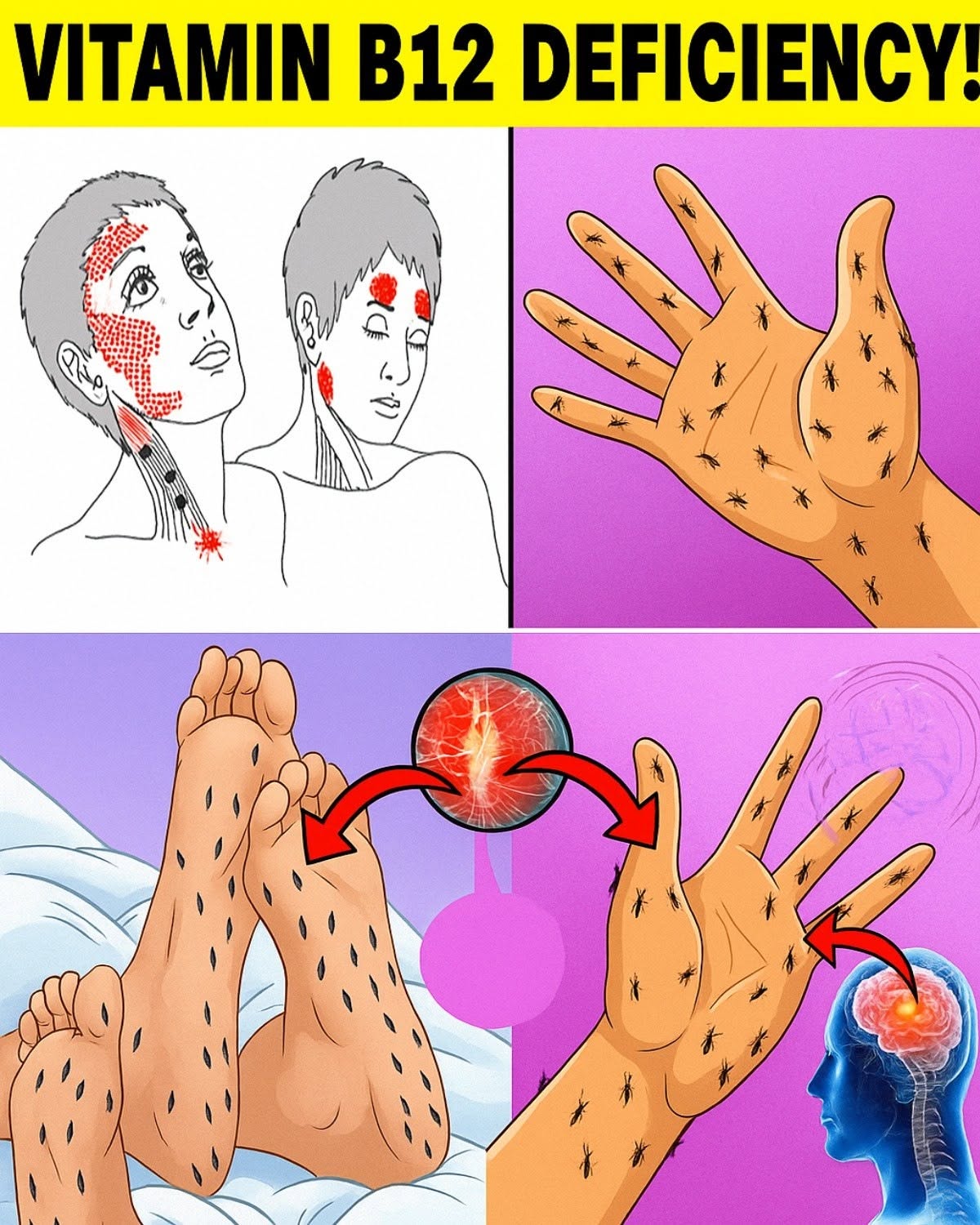
3. Tingling and Numbness
Tingling sensations, often described as pins and needles, burning, or numbness in the hands and feet, are key neurological signs of vitamin B12 deficiency. These symptoms occur because B12 is crucial for maintaining the protective myelin sheath around nerves. Without adequate B12, nerve function deteriorates, leading to these abnormal sensations.
Persistent or worsening tingling should never be ignored, especially if it affects both sides of the body. If left untreated, nerve damage can become permanent, making early diagnosis and treatment critical.
4. Balance and Walking Difficulties
Vitamin B12 deficiency can impair coordination and balance, sometimes resulting in an unsteady gait or frequent stumbling. This happens because the deficiency affects the nerves that control muscle movement and spatial awareness.
People may notice difficulty climbing stairs, a feeling of instability when walking, or changes in posture. These symptoms should prompt immediate evaluation, as they can significantly increase the risk of falls, particularly in older adults.
5. Memory Problems and Brain Fog
Low vitamin B12 levels can also impact cognitive function. Individuals may experience memory lapses, difficulty concentrating, confusion, or a general sense of mental fogginess. These symptoms may be mistaken for early dementia or age-related cognitive decline.
While vitamin B12 supplementation does not prevent dementia in those without deficiency, cognitive symptoms related to B12 deficiency often improve with appropriate treatment. It is therefore important to consider B12 testing when memory or thinking changes occur, especially alongside other deficiency symptoms.