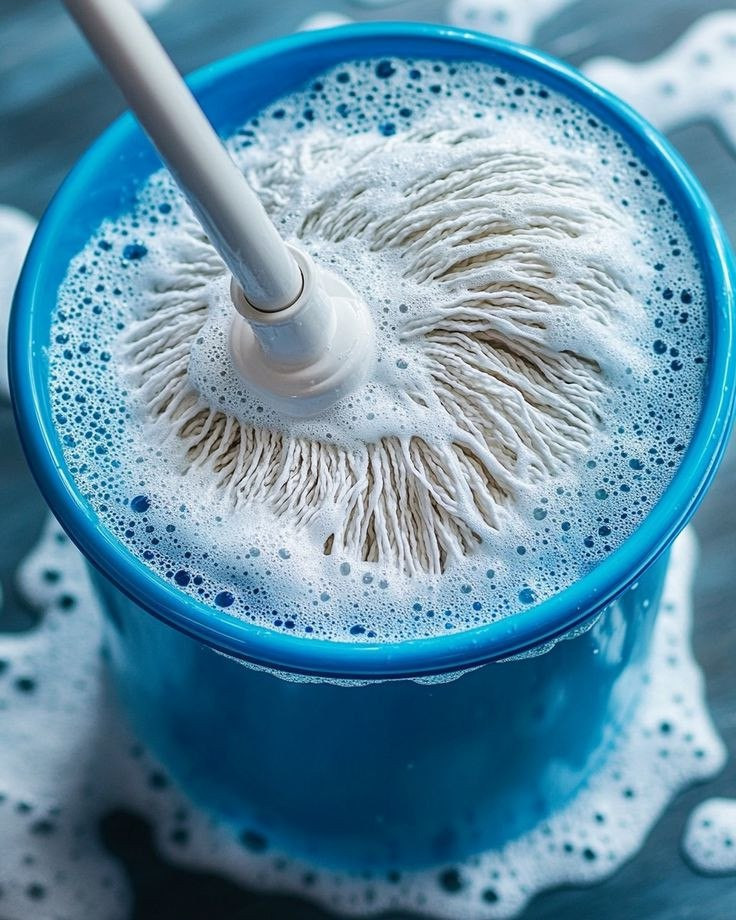
1. Antibacterial properties of vinegar
Vinegar, particularly white vinegar and apple cider vinegar, contains acetic acid, which has natural antibacterial properties. This acid can reduce the presence of various bacteria and microorganisms on cleaning tools like mops and buckets. While vinegar is not a sterilizing agent, its use can significantly lower microbial load and help control odors caused by bacterial growth.
Scientific evidence on vinegar’s effectiveness against bacteria is mostly from laboratory studies and traditional use rather than large clinical trials. It is effective against many common household bacteria but may not eliminate all pathogens, especially in heavily soiled environments. For routine mop and bucket cleaning, vinegar is a practical and affordable option.
To use vinegar for antibacterial cleaning, prepare a solution by mixing 1 cup of vinegar with 1 liter of water. Soak the mop or cleaning cloth in this solution for 15 to 30 minutes to allow the acetic acid to act on bacteria and odors. Adding a few drops of essential oils such as lemon or lavender can improve the scent without reducing effectiveness.
- Use white vinegar or apple cider vinegar for best results
- Soak the mop or cloth for at least 15 minutes
- Essential oils are optional and improve fragrance
- Prepare the solution fresh each time for maximum antibacterial activity
2. Proper cleaning procedure
Using vinegar to clean mops and buckets requires a straightforward but consistent method to ensure effectiveness. First, mix the vinegar solution fresh before use. Dip the mop head or cleaning cloth thoroughly into the vinegar-water mixture and let it soak for 15 to 30 minutes. This soaking period allows the vinegar to penetrate and loosen dirt, grime, and bacteria.
After soaking, rinse the mop or cloth thoroughly under running water to remove vinegar residue along with loosened dirt. This step prevents any lingering vinegar smell and avoids potential material degradation from prolonged acid exposure. Regular cleaning of the bucket itself is also recommended, which can be done by wiping it inside with a cloth soaked in the vinegar solution.
For best maintenance, repeat this cleaning routine at least once a week, especially if the mop is used frequently. This schedule helps prevent the buildup of bacteria and unpleasant odors that can reduce cleaning effectiveness.
- Prepare vinegar solution fresh each use
- Soak mop or cloth for 15–30 minutes
- Rinse thoroughly after soaking
- Wipe the bucket with vinegar solution regularly
- Clean at least weekly for heavy use






