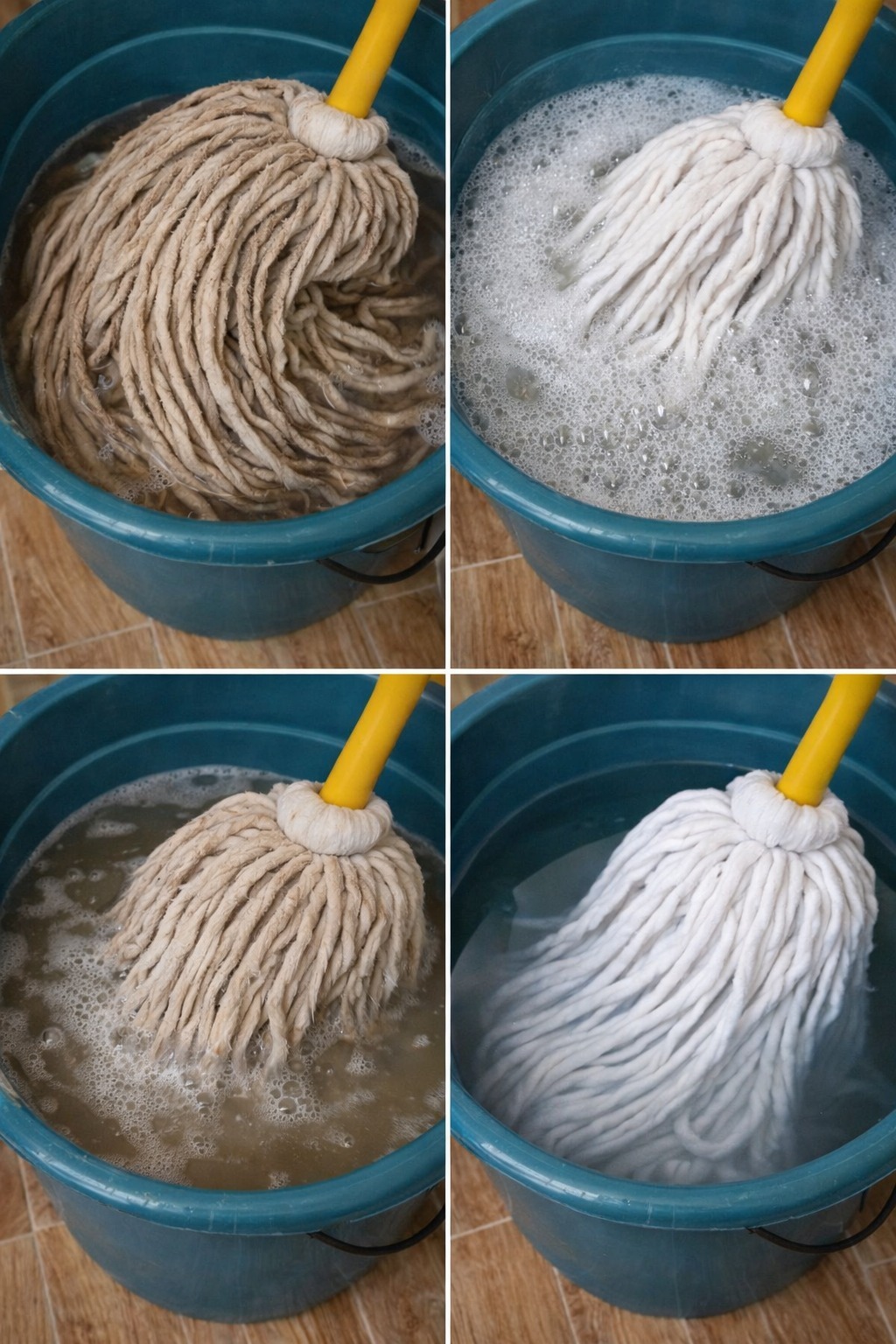
1. Baking soda cleaning
Baking soda, known chemically as sodium bicarbonate, is a mild alkaline compound that can neutralize odors and dissolve dirt and grease. Its gentle abrasive quality allows it to scrub away grime without damaging mop fibers. While strong clinical data on mop cleaning is limited, baking soda’s widespread traditional use in household cleaning supports its effectiveness for this purpose.
To clean a dirty mop with baking soda, dissolve about half a glass (approximately 60 grams) of baking soda into a bucket of warm water. Submerge the mop head or mop cloths and let them soak for two hours. After soaking, rinse thoroughly with clean water until the rinse water runs clear. For an extra deep clean, you may also wash the mop in the washing machine using baking soda placed in the detergent compartment and setting the wash temperature to at least 70°C (158°F) to enhance sanitation.
- Use warm water to help dissolve baking soda.
- Soak for a minimum of two hours for best results.
- Rinse thoroughly to remove residue.
- Machine wash optional for synthetic mop heads.
Avoid using baking soda on delicate mop materials that might degrade with alkaline substances. Always test on a small area if unsure.
2. Vinegar and lemon soak
Vinegar contains acetic acid, which has antimicrobial properties and can break down mineral deposits and grease. Lemon juice adds natural acidity and a fresh scent, helping to combat odors caused by bacterial growth in mop fibers. Though scientific studies directly on mop sanitation are sparse, vinegar and lemon are well-established natural cleaning agents.
To prepare this soak, mix one cup of white vinegar per liter of warm water in a container. Soak the mop for about 30 minutes, then wring it out completely. For enhanced cleaning, add two tablespoons of baking soda to the water to boost degreasing and deodorizing effects. Separately, soak the mop in a mixture of the juice of two lemons and water for one hour, then rinse thoroughly.
- Use warm water to activate cleaning properties.
- Soak mop for 30 minutes in vinegar solution.
- Add baking soda cautiously to avoid excessive fizzing.
- Use lemon soak for odor control and extra freshness.
Be cautious using vinegar on certain mop materials like natural fibers that may be sensitive to acid. Avoid mixing vinegar directly with bleach or ammonia cleaners.
3. Ammonia and water wash
Ammonia is a potent alkaline cleaner effective at cutting through heavy dirt, grease, and grime. It can restore a mop’s appearance by breaking down stubborn residues. However, ammonia has a strong odor and can be irritating to skin and respiratory systems, so proper ventilation and protective gloves are recommended during use.
To use, dilute a small amount of household ammonia (about 1/4 cup) into a bucket of water (approximately 4 liters). Soak the mop briefly, then rinse thoroughly under running water to ensure no ammonia residue remains. Dry the mop completely before storage to prevent unpleasant odors and bacterial growth.
- Use diluted ammonia solutions only.
- Ensure good ventilation during use.
- Wear gloves to protect skin.
- Rinse mop thoroughly after soaking.
- Dry mop completely before storing.
Avoid mixing ammonia with bleach or acidic cleaners, as this can produce toxic gases. Ammonia should not be used on delicate mop materials that could be damaged by strong alkalinity.






