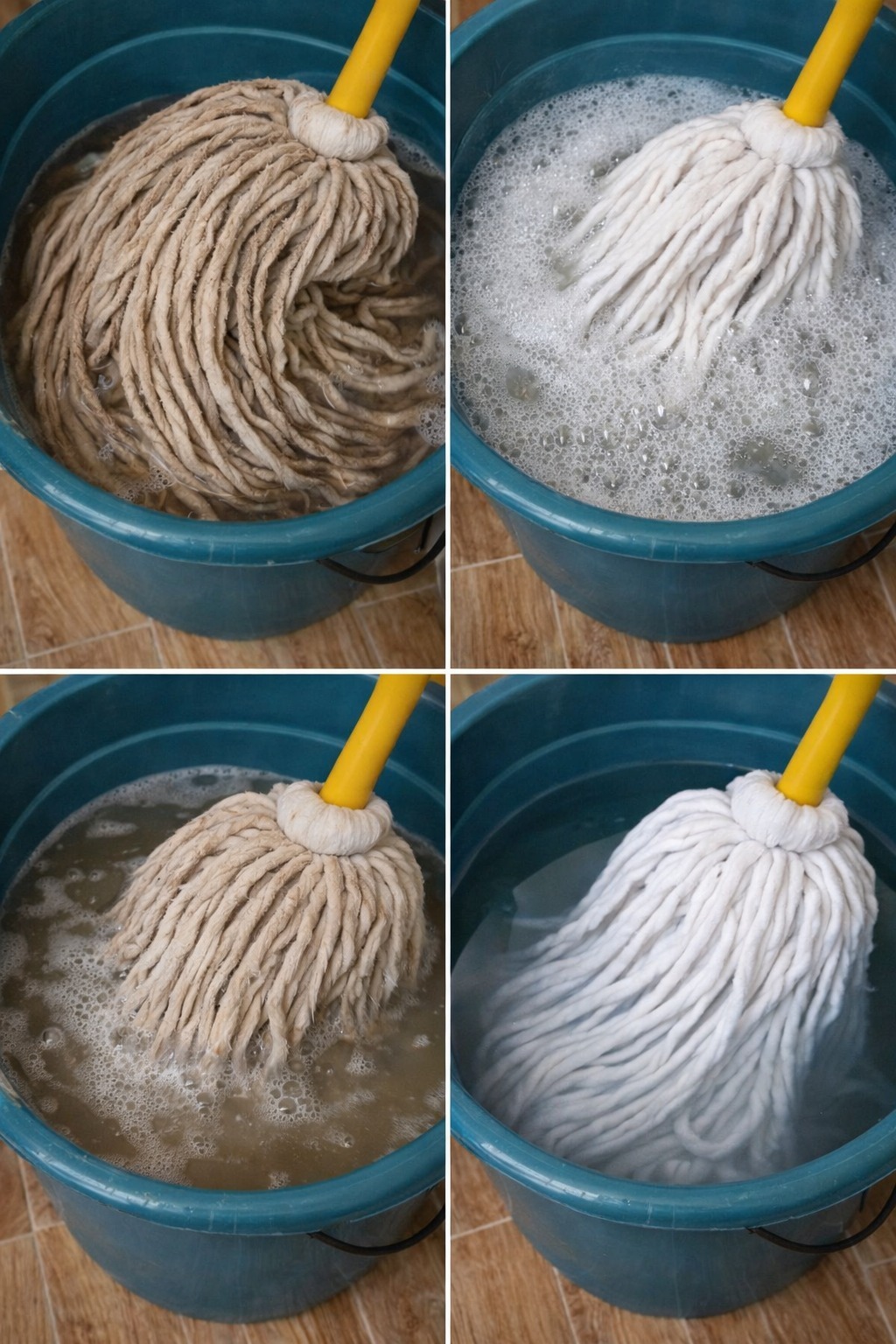
4. Tea tree oil antibacterial soak
Tea tree oil is an essential oil with documented antibacterial and antifungal properties. It works by disrupting the membranes of certain microorganisms, making it effective for reducing bacterial load and odors in mop fibers. This remedy is based on traditional and some laboratory studies; however, direct clinical evidence for mop cleaning is limited.
To use, fill a bucket with warm water, add the juice of two lemons, and include 10 to 15 drops of pure tea tree oil. Submerge the mop head and let it soak for about 30 minutes. After soaking, rinse the mop thoroughly with clean water. This soak not only cleans but also helps eliminate lingering odors.
- Use pure, therapeutic-grade tea tree oil.
- Do not exceed recommended drops to avoid skin irritation.
- Rinse mop thoroughly after soaking.
- Store mop dry to maintain freshness.
Avoid contact with eyes and skin irritation by handling tea tree oil with care. Those with sensitive skin or allergies should test a small amount or consult a healthcare provider before use.
5. Proper drying and storage
After cleaning, drying your mop properly is essential to prevent bacterial and fungal growth that can cause odors and reduce mop lifespan. Store the mop in a dry, well-ventilated area, ideally hanging it so all fibers are exposed to air. Avoid leaving the mop damp in a bucket or enclosed space.
Effective drying practices include wringing out excess water thoroughly and allowing the mop to air dry completely before storage. A dry mop maintains hygiene and improves cleaning efficiency for subsequent uses.
- Wring out mop thoroughly after washing.
- Hang mop head upright in a well-ventilated space.
- Do not store mop in a damp bucket or closet.
- Ensure mop is completely dry before next use.
Practical guidance on safe use
When using these natural cleaning methods, moderate quantities are sufficient—excessive use of baking soda, vinegar, ammonia, or essential oils is unnecessary and may cause damage or irritation. Limit soak times to recommended durations and rinse thoroughly to remove residues. Rotate between methods or take breaks from frequent deep cleaning to preserve mop integrity.
Who should avoid these remedies
Pregnant individuals, people with respiratory conditions like asthma, or those with sensitive skin should exercise caution, particularly with ammonia and essential oils. Consult a healthcare provider if you have concerns about reactions or exposure risks. Avoid using strong chemicals or essential oils on mop materials that specify manufacturer restrictions.
When to see a doctor
If you experience persistent respiratory irritation, skin rash, or allergic reactions after exposure to cleaning agents, seek medical advice promptly. Additionally, if floor cleaning-related odors or residues persist despite cleaning, professional assistance may be warranted to address mold or bacterial contamination.
Conclusion
Maintaining a clean mop is essential for effective floor hygiene and odor control. Natural remedies like baking soda, vinegar, lemon, ammonia (used cautiously), and tea tree oil offer economical, low-impact methods to refresh your mop and extend its usable life. Proper drying and storage complete the process, helping keep your cleaning tools sanitary and ready for use.
Disclaimer: This information is for educational purposes only and does not substitute professional medical or cleaning advice. Always follow safety guidelines and product instructions.






