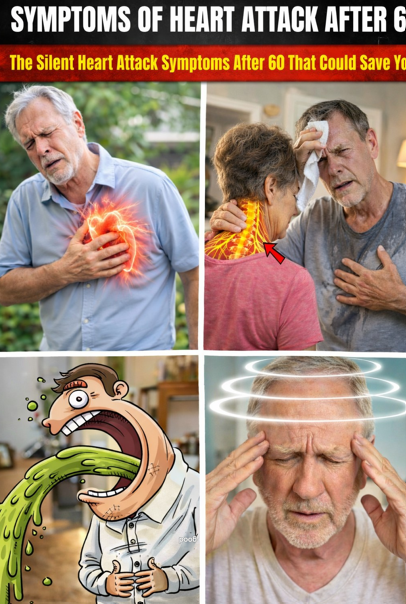
3. Discomfort in neck, jaw, or back
Unlike the classic chest pain often associated with heart attacks, older adults may feel discomfort in less obvious places such as the neck, jaw, or upper back. This discomfort can be a dull ache, pressure, or a mild burning sensation that comes and goes.
These areas share nerve pathways with the heart, so pain signals can be referred to these locations. Because this pain can mimic muscle strain, arthritis, or dental issues, it is often overlooked or misdiagnosed.
- Dull or aching sensation rather than sharp pain
- Symptoms triggered by exertion or stress and relieved by rest
- Discomfort lasting several minutes or recurring over days
If you experience new or unusual pain in these areas, especially if it occurs with other symptoms like fatigue or shortness of breath, it’s important to discuss it with your healthcare provider for proper evaluation.
4. Nausea or indigestion-like feelings
Some people over 60 experience nausea, vomiting, or a sensation similar to indigestion as a sign of a heart attack. This can feel like fullness, bloating, or discomfort in the upper abdomen, often without a clear relation to food intake.
This symptom occurs because reduced blood flow to the heart can affect the nerves that also serve the stomach and digestive tract. It can easily be mistaken for gastrointestinal issues such as acid reflux, gastritis, or food poisoning.
- Persistent nausea or indigestion that does not improve with antacids or dietary changes
- Episodes of vomiting without clear cause
- Associated symptoms like fatigue or lightheadedness
If nausea or indigestion-like symptoms are new, severe, or accompanied by other heart-related signs, seek medical attention to rule out cardiac causes.
5. Lightheadedness or dizziness
Feeling lightheaded, dizzy, or faint can be a sign of reduced blood flow to the brain due to heart problems. This can happen if the heart is not pumping effectively or if an irregular heartbeat reduces circulation.
Older adults may experience these symptoms as brief episodes or longer-lasting spells that affect balance or cause fainting. Because these symptoms can also be related to blood pressure changes or medications, they require careful evaluation.
- Sudden onset of dizziness without obvious triggers
- Feeling faint or actually fainting
- Accompanied by chest discomfort, sweating, or shortness of breath
Report any new or worsening dizziness to your healthcare provider promptly to determine if heart evaluation or ECG monitoring is needed.






