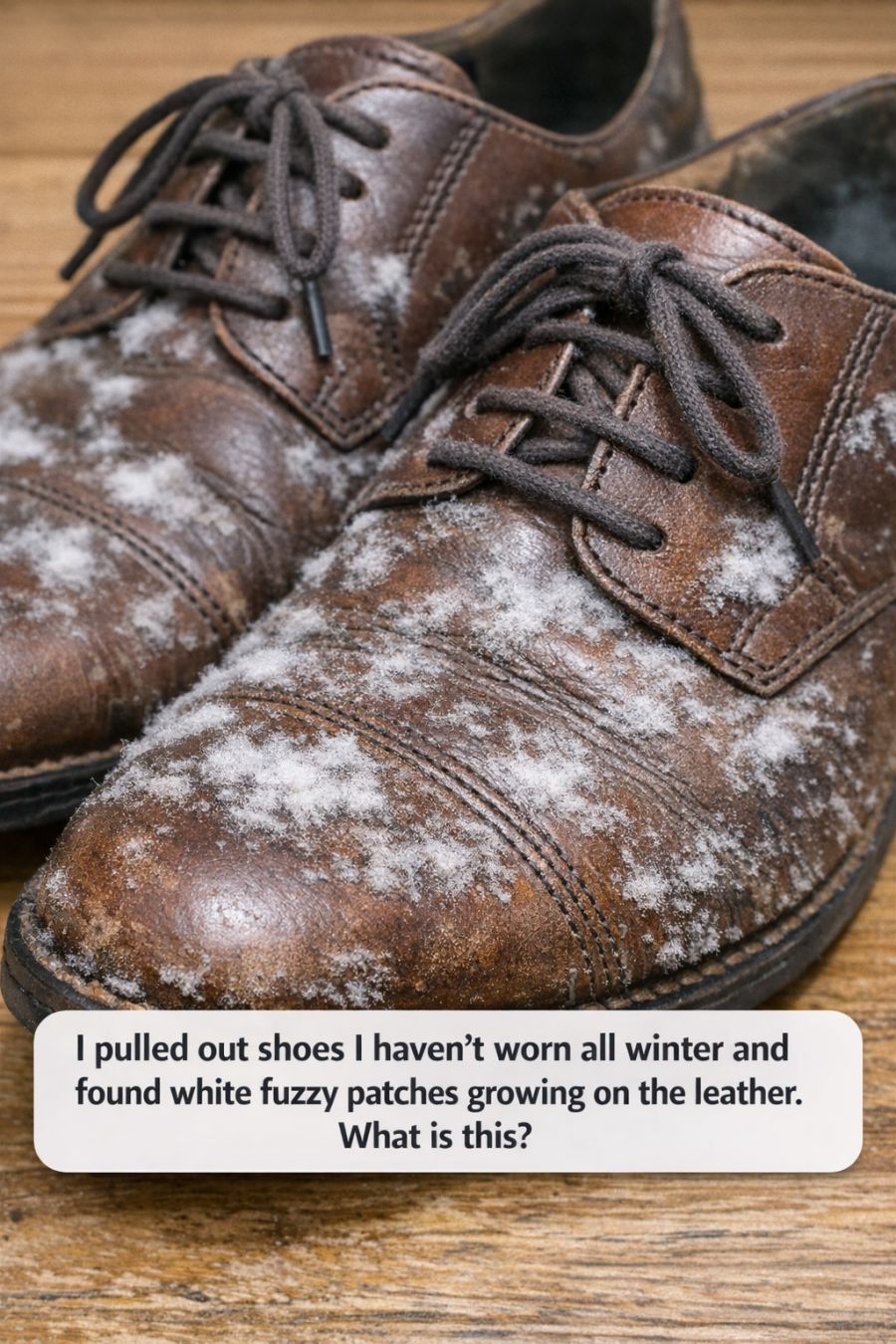
1. Identify white patches
The white fuzzy patches on your leather shoes are most often mold or mildew. Mold appears as a fuzzy growth that can be white, green, or even black, while mildew tends to be powdery and usually white or gray. These fungi thrive in moist, warm environments and feed on organic matter, including dirt, sweat, and skin cells left on the shoe surface.
Leather is porous, so mold can penetrate beneath the surface, making it essential to address the issue promptly. Left untreated, mold can damage the leather’s appearance and structural integrity.
2. Why mold grows on leather
Leather absorbs moisture from the environment, especially when stored in places with high humidity—typically above 60%. During winter, shoes often sit unused in closets or basements where temperature fluctuations cause condensation on their surfaces, providing ideal moisture for mold growth.
Additionally, residues like sweat and dirt from previous wear serve as nutrients for mold. Without thorough cleaning and proper drying before storage, these conditions encourage fungal colonies to develop on leather.






