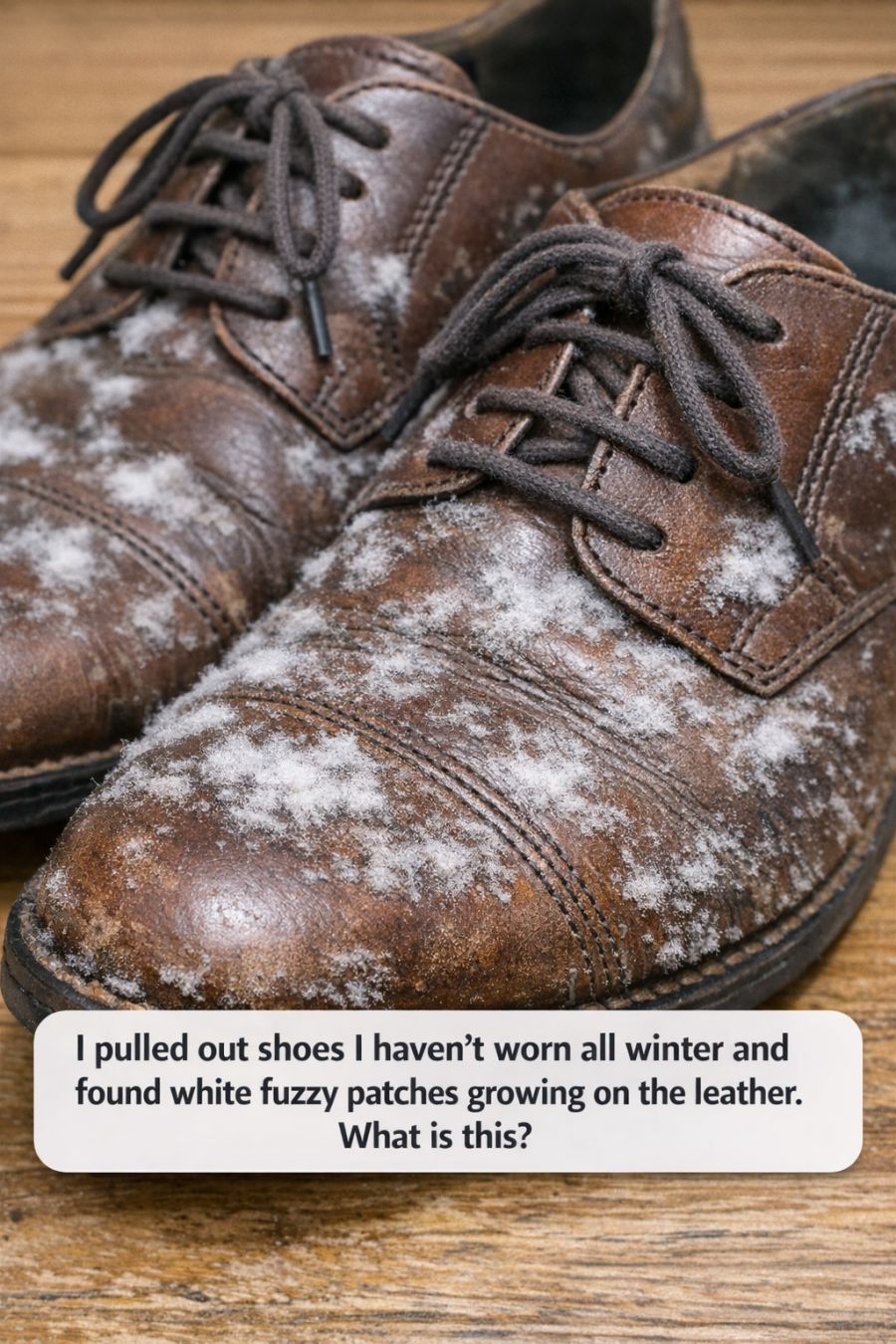
3. Distinguishing mold vs salt stains
Not all white patches on leather shoes are mold. Salt stains, common in winter regions where road salt is used, appear as chalky, crystalline white streaks or blotches. In contrast, mold is fuzzy or powdery and may be white, green, or black.
A simple test can help differentiate them: dampen a clean cloth with white vinegar and gently wipe the patch. Mold or mildew will usually smear onto the cloth, while salt deposits dissolve in the vinegar, leaving the cloth clear. This distinction guides the proper cleaning method.
4. Impact of winter storage
Winter storage conditions significantly affect mold risk. Shoes kept in airtight boxes or plastic bags trap moisture, creating a breeding ground for mold. Basements and attics often have fluctuating temperatures and higher humidity, which worsen the problem.
Ensuring shoes are completely dry before storing and placing them in ventilated, climate-controlled spaces reduces mold growth. Using moisture absorbers like silica gel packets inside storage containers can help maintain low humidity levels.
5. Health risks of mold
Mold on shoes poses more than an aesthetic issue; it can affect health. Mold spores released into the air can cause allergic reactions, respiratory irritation, or skin problems, especially in people with asthma, allergies, or weakened immune systems.
When handling moldy shoes, wearing gloves and a mask limits exposure to spores. If symptoms such as coughing, sneezing, or skin irritation occur after contact, seek medical advice promptly.






