1. Understanding magnesium deficiency
Magnesium is a crucial nutrient for houseplants, especially in the fall when natural light diminishes. It serves as the central atom in chlorophyll molecules, making it essential for photosynthesis — the process plants use to convert light into energy. Without enough magnesium, plants exhibit dull, yellowing leaves, slower growth, and weakened blooms.
Magnesium deficiency often goes unnoticed until symptoms become severe. Indoor plants grown in potting mixes that lack magnesium or that have been fertilized heavily without replenishing magnesium are most at risk. Plants like African violets, orchids, and Christmas cacti commonly show deficiency signs during autumn as they prepare for winter flowering.
- Yellowing between leaf veins (interveinal chlorosis)
- Leaf curling or brittleness
- Reduced flowering or smaller blooms
- General loss of vigor during shorter daylight hours
Identifying these signs early allows for targeted correction, improving plant health and bloom longevity through fall and winter.
2. Safe Epsom salt application
Epsom salt, chemically magnesium sulfate, is an effective way to supplement magnesium in houseplants during fall. It replenishes magnesium levels and provides sulfur, which supports protein synthesis and overall plant strength. The key is to use it correctly to avoid nutrient imbalances.
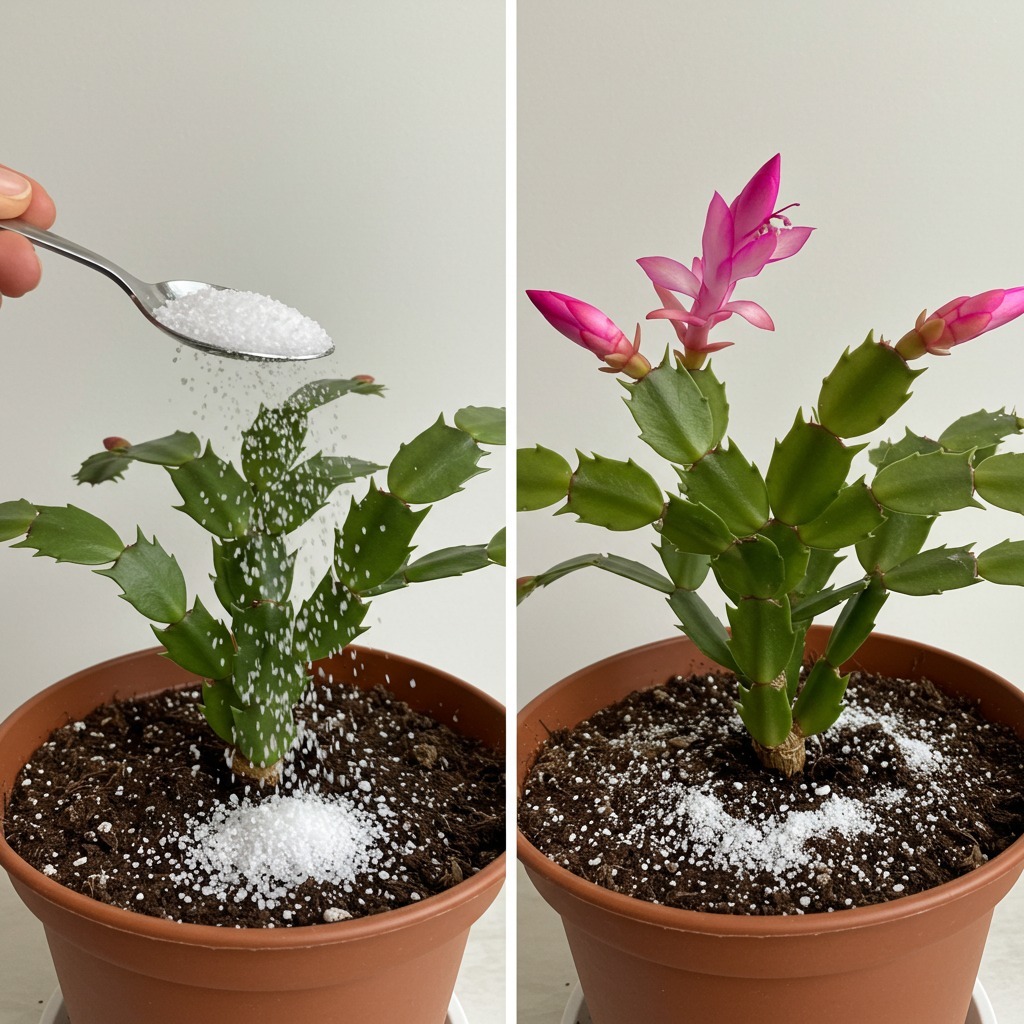
For indoor plants, sprinkle 1 tablespoon of pure Epsom salt around the base of each pot or dissolve it in 1 liter (4 cups) of water to use as a liquid feed. Apply this solution every 3 to 4 weeks during the fall and winter months. Avoid excessive use, as too much magnesium can interfere with calcium and potassium uptake, leading to other deficiencies.
- Use only pure Epsom salt without additives
- Do not apply on plants sensitive to high magnesium, such as succulents or cacti (except Christmas cacti)
- Avoid direct contact with leaves to prevent spotting
- Do not combine simultaneously with high-phosphorus fertilizers to prevent nutrient lockout
This method boosts photosynthesis and supports blooming in low light without harming the plants.






