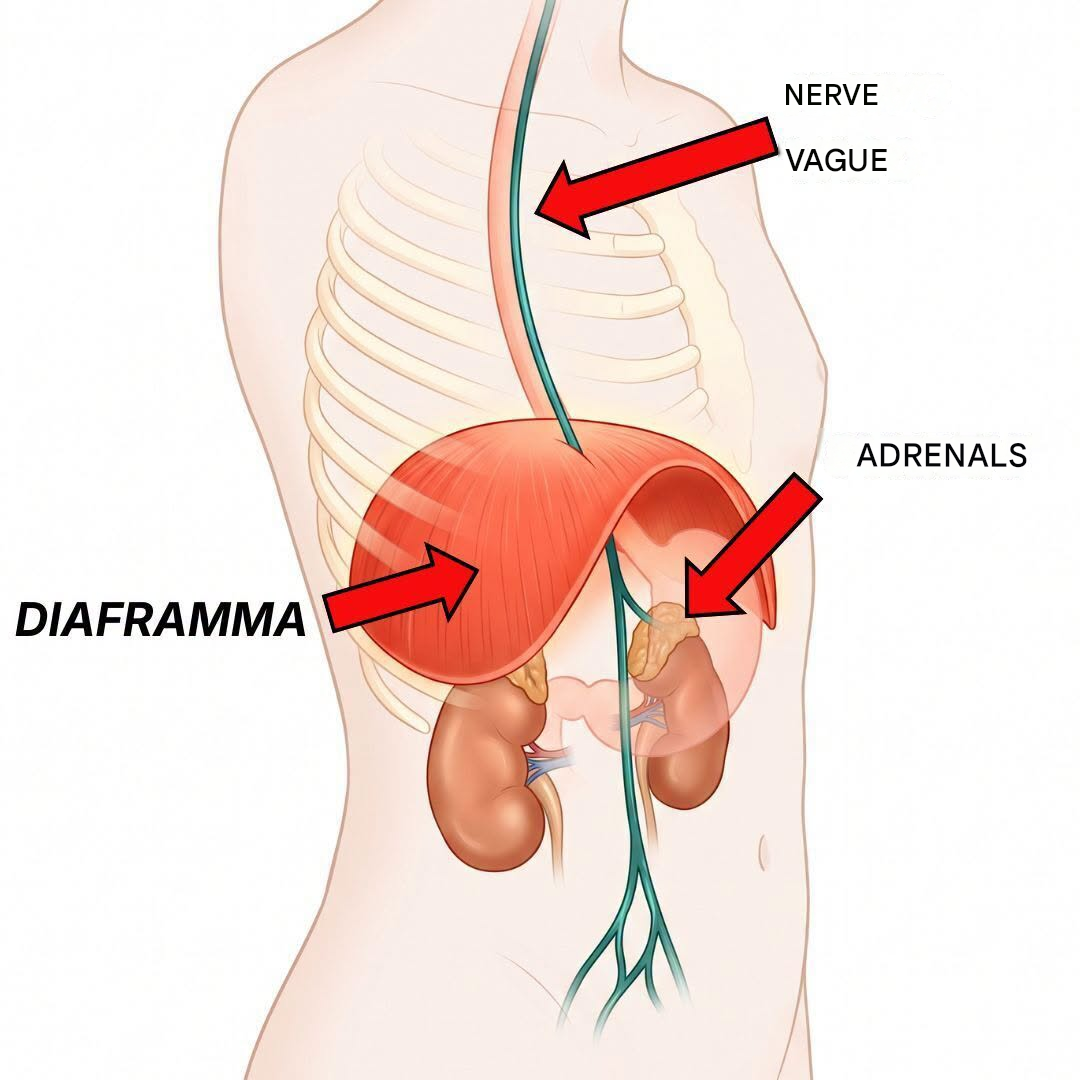
1. What is the diaphragm?
The diaphragm is a large, dome-shaped muscle located just below the lungs, separating the chest cavity from the abdominal cavity. It plays a crucial role in respiration by contracting and flattening when you inhale, which increases the volume of the chest cavity and draws air into the lungs. When it relaxes, the diaphragm returns to its dome shape, pushing air out of the lungs during exhalation.
Beyond its role in breathing, the diaphragm also supports other vital functions. It influences intra-abdominal pressure and works in coordination with core muscles to support posture and stabilize the spine. Additionally, several important structures pass through or near the diaphragm, including the esophagus, major blood vessels, and the vagus nerve, linking breathing with other bodily systems.
2. What is the vagus nerve?
The vagus nerve is one of the longest and most complex nerves in the body, extending from the brainstem through the neck and down into the chest and abdomen. It is a key component of the parasympathetic nervous system, which manages the body’s rest-and-digest functions.
This nerve regulates several important bodily processes including heart rate, digestion, and respiratory reflexes. It acts as a communication highway between the brain and internal organs, helping to dampen the stress response and promote relaxation. Stimulating the vagus nerve through deep, controlled breathing can support its activity and help the body shift away from chronic stress.






