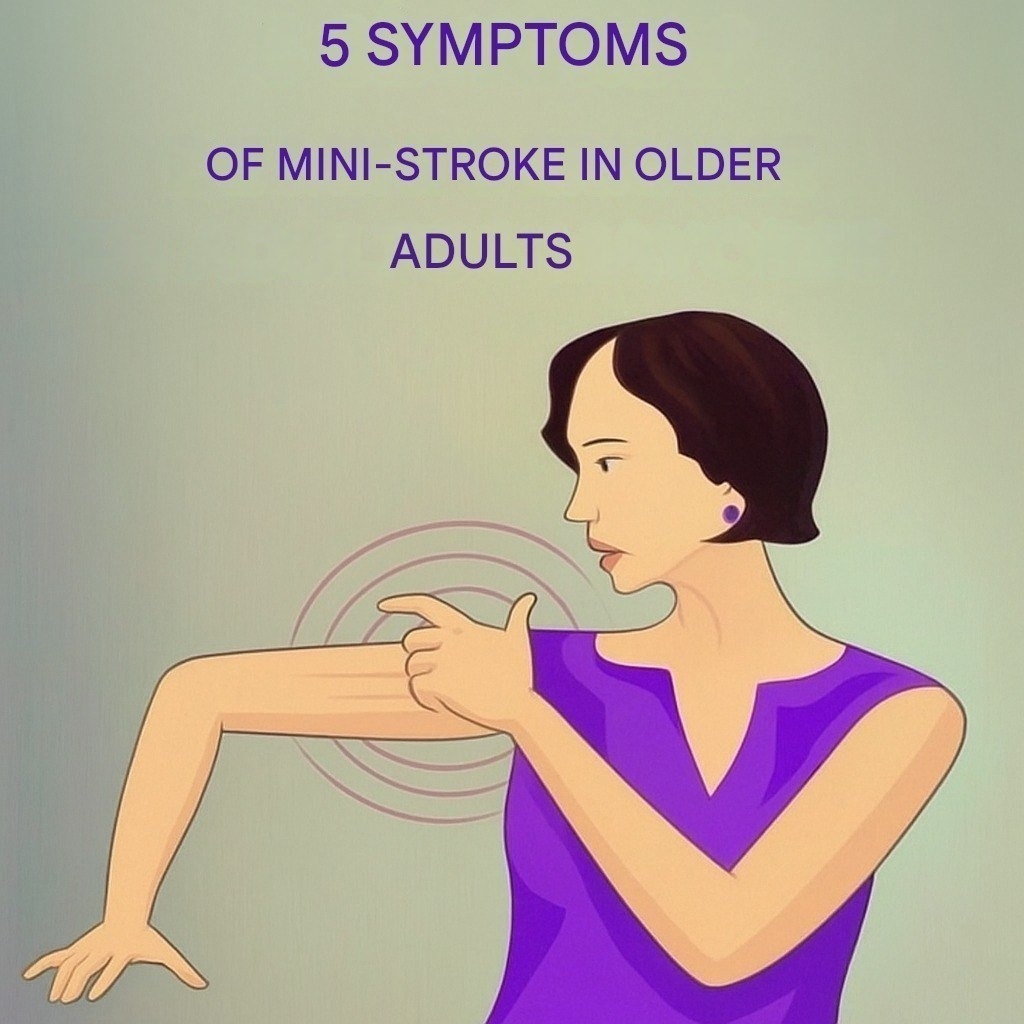
1. Sudden one-sided weakness or numbness
One of the most critical signs of a transient ischemic attack (TIA) is sudden weakness or numbness confined to one side of the body. This can affect the face, arm, hand, or leg. For seniors, this may present as difficulty holding objects, trouble lifting an arm, or a leg feeling unusually heavy or numb.
This symptom occurs because a temporary blockage in blood flow affects the brain region controlling movement and sensation on one side of the body. It’s important to act quickly because these signs can precede a full stroke.
A simple test to check for this is to ask the person to raise both arms. If one arm drifts downward or cannot be raised normally, emergency medical care should be sought immediately.
2. Facial drooping
Facial drooping is another hallmark symptom of a TIA. It typically appears as weakness on one side of the face, causing an uneven smile, a drooping mouth, or numbness. The eye on that side may also appear lower or less responsive.
This sign is often included in stroke recognition tools like FAST (Face, Arms, Speech, Time) because it is a clear indicator of neurological impairment. Even if the facial drooping resolves quickly, it should be treated as an emergency.
3. Speech or comprehension difficulties
A sudden change in speech or understanding is a serious warning sign. A senior experiencing a TIA might have slurred speech, use incorrect words, or struggle to find simple words. They may also be unable to comprehend what others are saying despite appearing alert.
Asking the person to repeat a simple sentence can help identify this problem. Any sudden difficulty with speaking or understanding language should prompt immediate medical evaluation.






