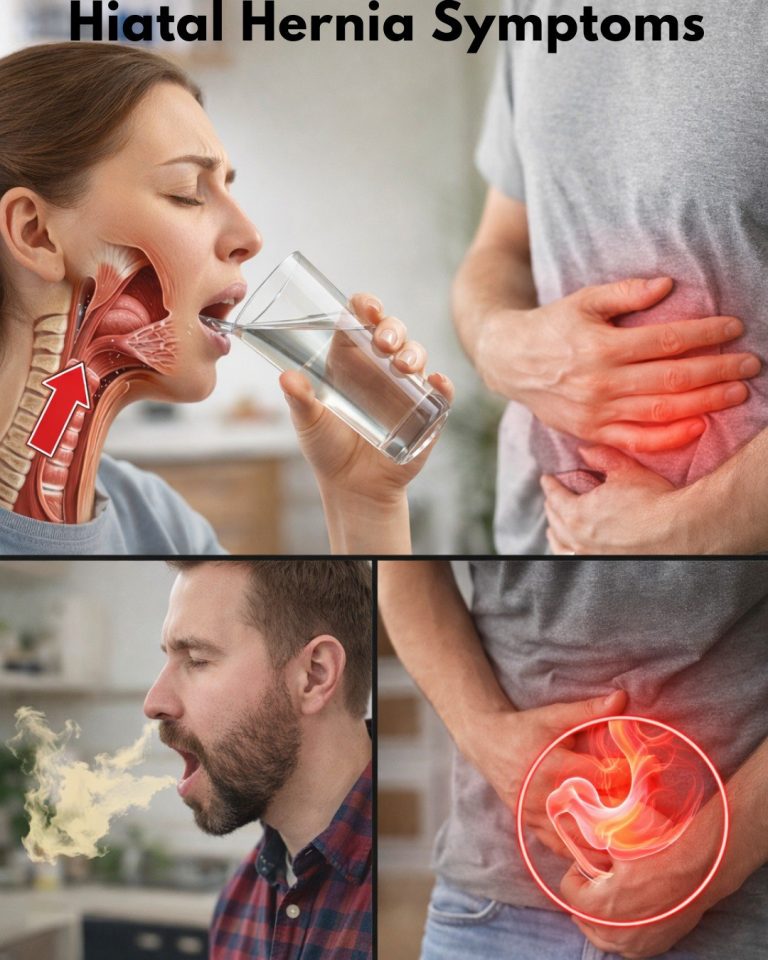
3. Frequent heartburn
Heartburn is a burning sensation in the chest or throat caused by acid reflux irritating the esophageal lining. It is one of the hallmark symptoms of hiatal hernia and may occur more often after meals or at night.
When the upper part of the stomach pushes through the diaphragm, the lower esophageal sphincter may weaken, allowing stomach acid to escape into the esophagus. This causes the familiar burning discomfort that can sometimes mimic heart-related pain.
Persistent heartburn should never be ignored, as it can lead to more serious issues such as Barrett’s esophagus or esophageal ulcers. Over-the-counter antacids may provide relief, but a healthcare provider can recommend appropriate tests like upper endoscopy or pH monitoring if symptoms continue.
4. Chest pain or discomfort
Chest pain or discomfort in hiatal hernia can range from mild tightness to more intense sensations similar to heart pain. It often occurs after heavy meals or physical exertion.
It is crucial to differentiate this pain from cardiac causes. If you experience severe or persistent chest pain, immediate medical evaluation is necessary to rule out a heart attack or other cardiac conditions.
For hiatal hernia-related discomfort, the pain results from acid reflux irritating the esophagus or from mechanical pressure of the herniated stomach. Managing diet, avoiding large meals, and elevating the head during sleep can reduce symptoms.
5. Difficulty swallowing
Difficulty swallowing, or dysphagia, occurs when food feels stuck or slow to pass through the throat or chest. In hiatal hernia, this may result from swelling, inflammation, or narrowing of the esophagus caused by chronic acid exposure.
This symptom can cause frustration and anxiety during meals and may lead to reduced food intake or weight loss if severe. It requires careful assessment to exclude other causes such as strictures or motility disorders.
If you notice persistent swallowing difficulties, consult your doctor who may recommend tests such as barium swallow or esophageal manometry to evaluate the function and structure of the esophagus.






