Preparing the oven and ingredients
Before starting the steaming cleaning process, ensure your oven is empty and free of loose debris. Remove racks if possible to clean them separately and avoid water damage to any electronics or sensors. This preparation step helps the steam and cleaning agents reach all interior surfaces evenly.
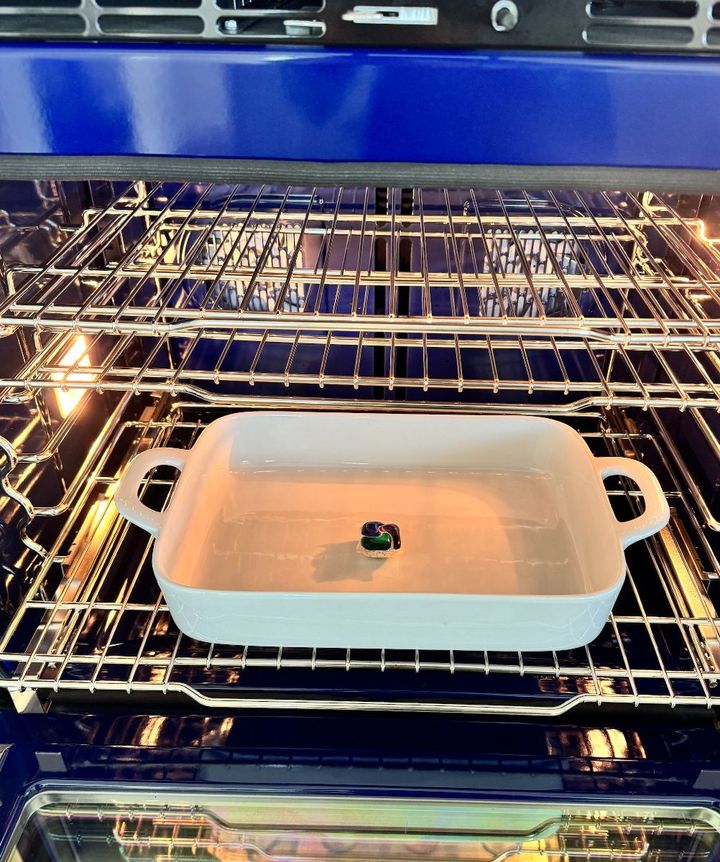
Gather the three essential ingredients for this method: a heatproof casserole dish, water, and a dishwashing pod. The dishwashing pod should contain enzymes and detergents formulated to break down grease and baked-on food residues effectively. Avoid using pods with bleach or harsh chemicals, as these could harm your oven’s interior coatings.
Fill the casserole dish with enough water to generate steam for about an hour, typically around two cups. Add one dishwashing pod to the water but do not dissolve it beforehand; placing the pod in the water inside the oven allows for gradual enzymatic action combined with steam heat.
The steaming cleaning process
Preheat your oven to 200 degrees Fahrenheit (approximately 93 degrees Celsius). This moderate temperature is sufficient to activate the enzymes in the dishwashing pod without risking damage to the oven’s components or coatings. Once the oven reaches temperature, carefully place the casserole dish filled with the water and dishwashing pod on the center rack.
Close the oven door and let the mixture steam for about one hour. The heat causes the water to evaporate slowly, and the dishwashing pod releases cleaning agents into the steam. This combination loosens hardened grease and grime, making it easier to wipe away without scrubbing.
After the hour has passed, turn off the oven and allow it to cool until it is warm but safe to handle. Exercise caution when opening the door, as hot steam may escape and cause burns. Using a damp cloth or sponge, wipe down all interior surfaces, including walls, roof, and door. Most baked-on residues should come off easily at this stage.
Post-cleaning care and maintenance
For any stubborn spots that resist the initial cleaning, repeat the steaming cycle or use a soft-bristled brush with gentle pressure. Avoid abrasive pads or metal scrubbers, which can scratch and degrade the oven’s finish. Regular application of this steaming method, such as once a month, helps prevent heavy buildup and maintains the oven’s efficiency.
After cleaning, allow the oven to air dry with the door open for a short period. This prevents moisture accumulation that could cause rust or mold. Reinstall the racks after wiping them separately with warm soapy water and drying thoroughly.
Refer to your oven’s manufacturer instructions for any particular care recommendations, especially if your oven has specialized coatings or self-cleaning features, to avoid accidental damage.
What to avoid
- Never mix dishwashing pods with oven cleaners or other chemicals, as this can produce harmful fumes or reduce cleaning effectiveness.
- Avoid using abrasive scrubbers or harsh chemical cleaners that contain strong acids or alkalis, which can damage enamel, glass, or stainless steel surfaces.
- Do not apply this steaming method to ovens with damaged seals, cracked glass, or exposed electrical elements, as moisture can worsen the damage.
- Avoid overheating the oven beyond recommended temperatures during this process to prevent warping or component failure.
Handling it safely
Wear heat-resistant gloves when placing and removing the hot casserole dish to protect your hands. Use eye protection if you anticipate exposure to steam or splashes. Ensure good ventilation by opening nearby windows if possible, as steam mixed with cleaning agents might cause mild respiratory irritation.
Keep children and pets away from the oven during the cleaning process to prevent accidental burns or ingestion of cleaning materials.
When the job is past a home fix and worth a professional
If your oven shows signs such as chipped or peeling interior surfaces, warped door seals, persistent smoke, or unusual odors after cleaning, it is advisable to call a professional technician. Electrical or heating element malfunctions also require expert repair. Typical service costs range from $200 to $500 depending on the issue and model. Prompt professional attention can prevent further damage and safety hazards.
Conclusion
This steaming cleaning method using just a dishwashing pod, water, and a heatproof dish offers an accessible and effective way to maintain your oven without harsh chemicals or intense scrubbing. By loosening grease and grime gently, it extends the lifespan of your appliance and keeps your kitchen safer. Combined with regular maintenance and mindful care, this approach simplifies oven upkeep and ensures reliable cooking performance.






