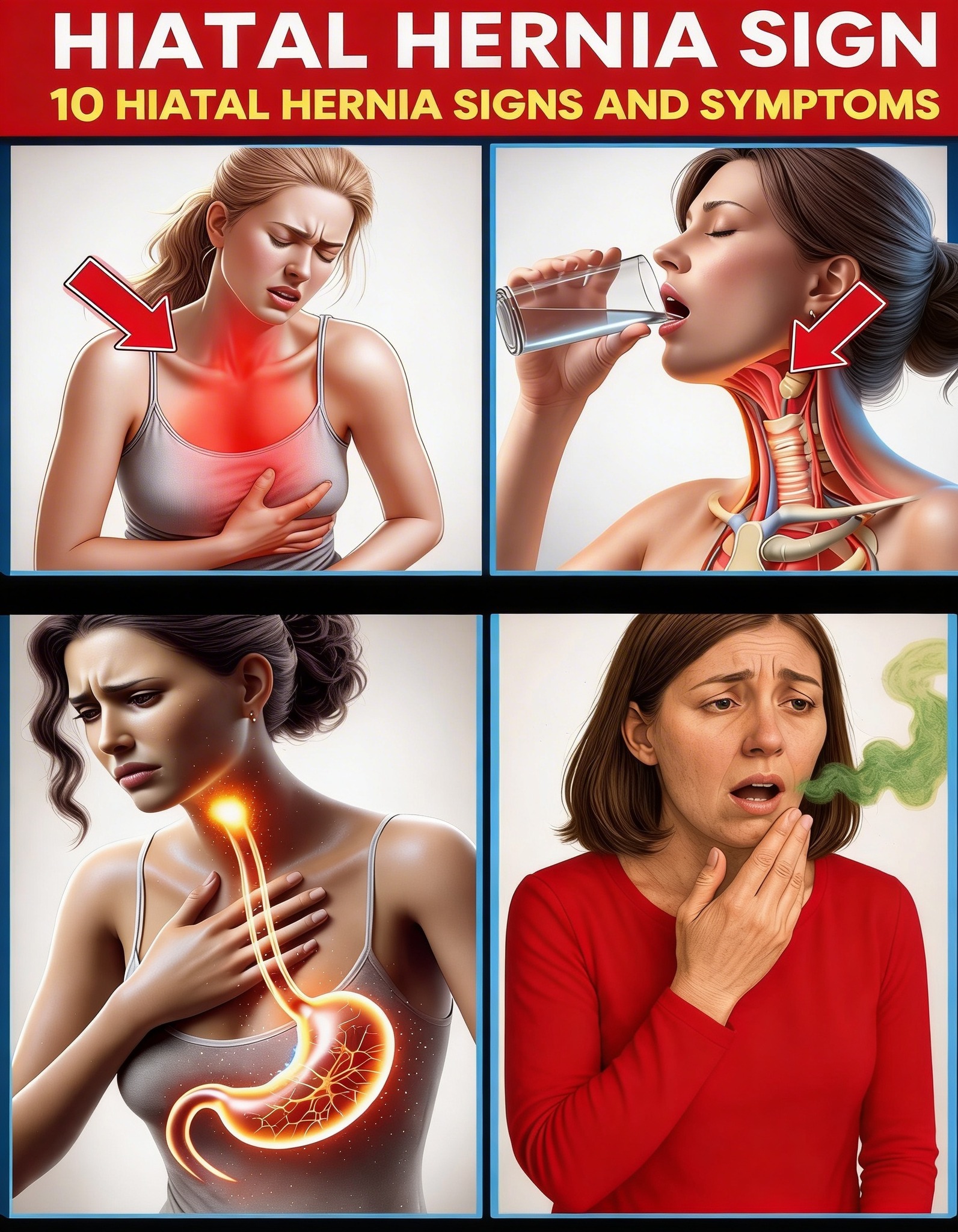
3. Regurgitation
Regurgitation refers to the effortless return of food or liquid into the throat or mouth, often leaving a sour or bitter taste. In hiatal hernia, the displacement of the stomach can promote this backward flow, especially after large meals or when lying down shortly after eating.
To reduce regurgitation, it is helpful to eat slowly, avoid overeating, and remain upright for at least two to three hours after meals. These practical steps can decrease the frequency and severity of episodes, improving quality of life.
4. Difficulty Swallowing (Dysphagia)
Dysphagia or difficulty swallowing can occur when the hiatal hernia exerts pressure on the esophagus, creating a sensation of food being stuck. This can increase anxiety during meals and lead to avoidance of certain foods.
Softening foods, chewing thoroughly, and eating smaller portions can ease this symptom. If swallowing difficulties persist or worsen, medical evaluation including an esophagogastroduodenoscopy (EGD) may be necessary to assess the esophagus and rule out complications.
5. Chest or Upper Abdominal Pain
Chest or upper abdominal pain related to hiatal hernia can mimic cardiac pain, causing significant concern. This pain typically follows meals and may worsen when bending over or lying down. The discomfort arises from irritation and inflammation of the esophagus and stomach lining due to acid exposure.
It is crucial to differentiate this pain from cardiac causes. Anyone experiencing new, severe, or unexplained chest pain should seek immediate medical evaluation to rule out heart conditions. For known hiatal hernia, managing acid reflux and avoiding triggers can reduce these painful episodes.






